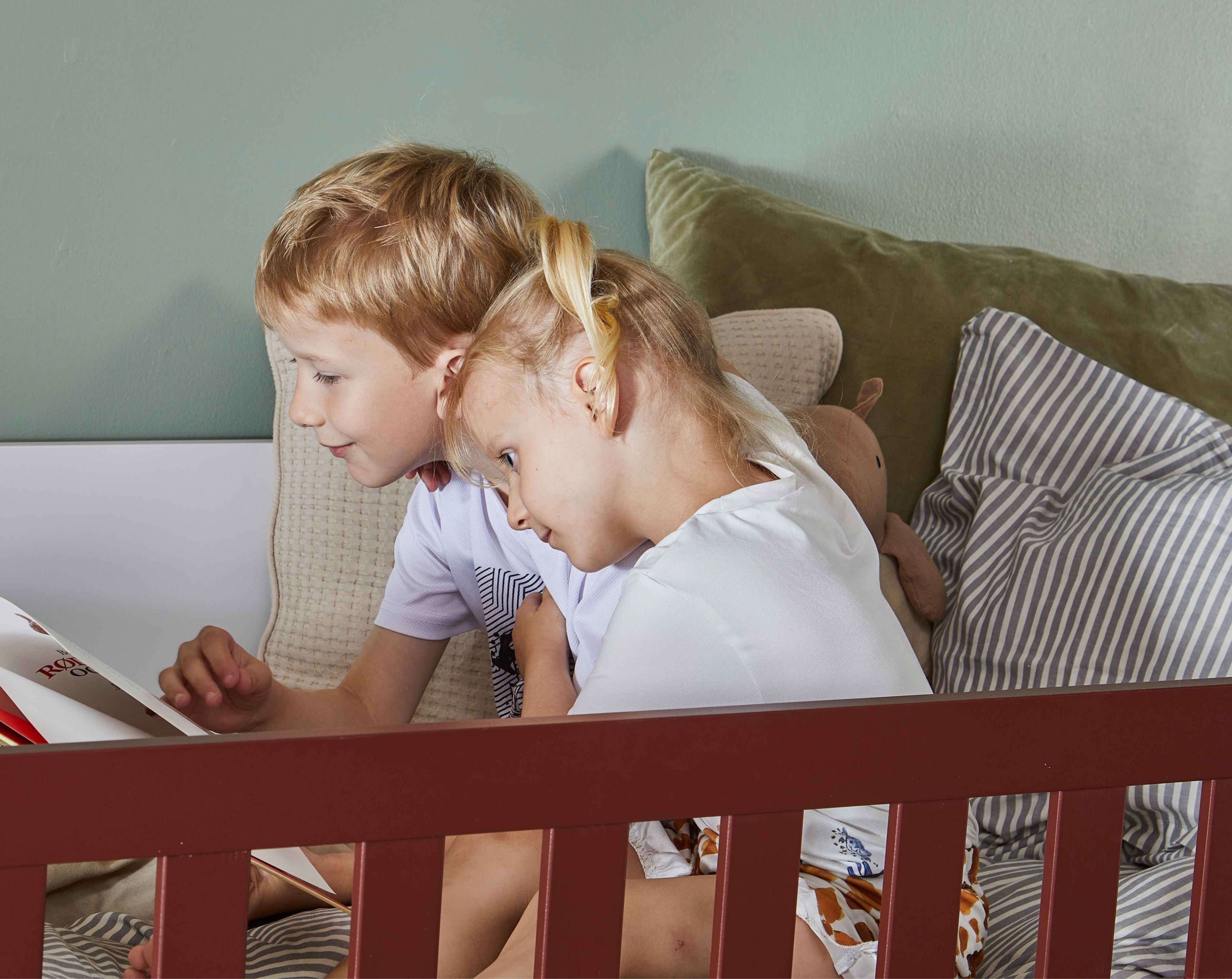


Play and motor development in children
Play and motor development in children are closely linked. When children climb , balance, jump and move, they strengthen both their bodies and their brains.
Motor development forms the foundation for a child's well-being, concentration and self-confidence. That's why it makes sense to include movement in the design of the children's room, not just in sports and leisure activities.
What is motor development?
Motor development is about the child's ability to control and coordinate the body. It is typically divided into:
Gross motor skills
Gross motor skills cover larger movements such as jumping, climbing, running and balancing. They are the foundation of body control and physical strength.
Fine motor skills
Fine motor skills are about precision, about drawing, building, writing and buttoning buttons.
Gross motor skills and fine motor skills work together. When a child has control over their body, it becomes easier to sit still, concentrate and learn new things. Therefore, motor skills and learning are closely related.

Movement in the children's room - more than just play
In a day with many sedentary hours, movement in the children's room can make a big difference.
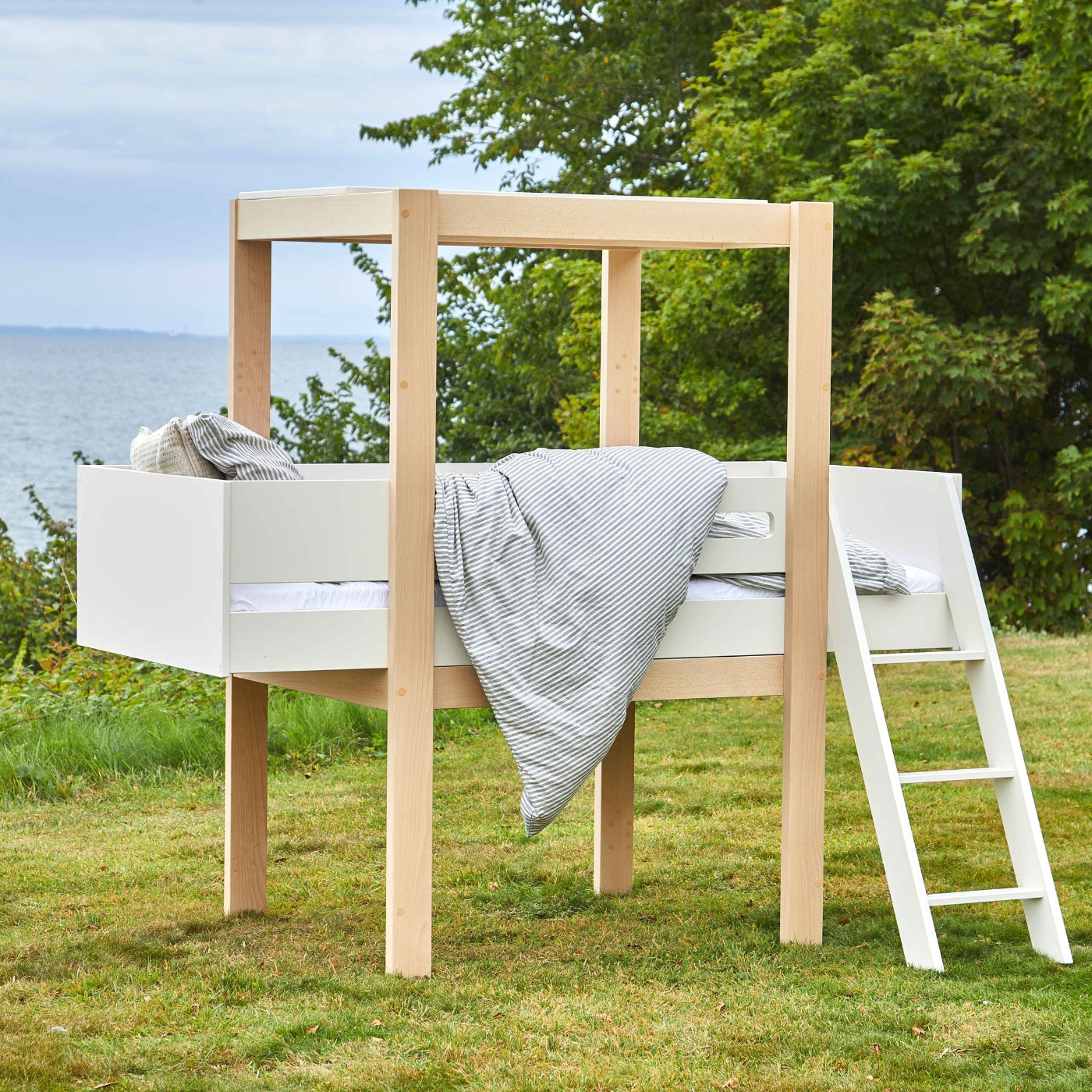
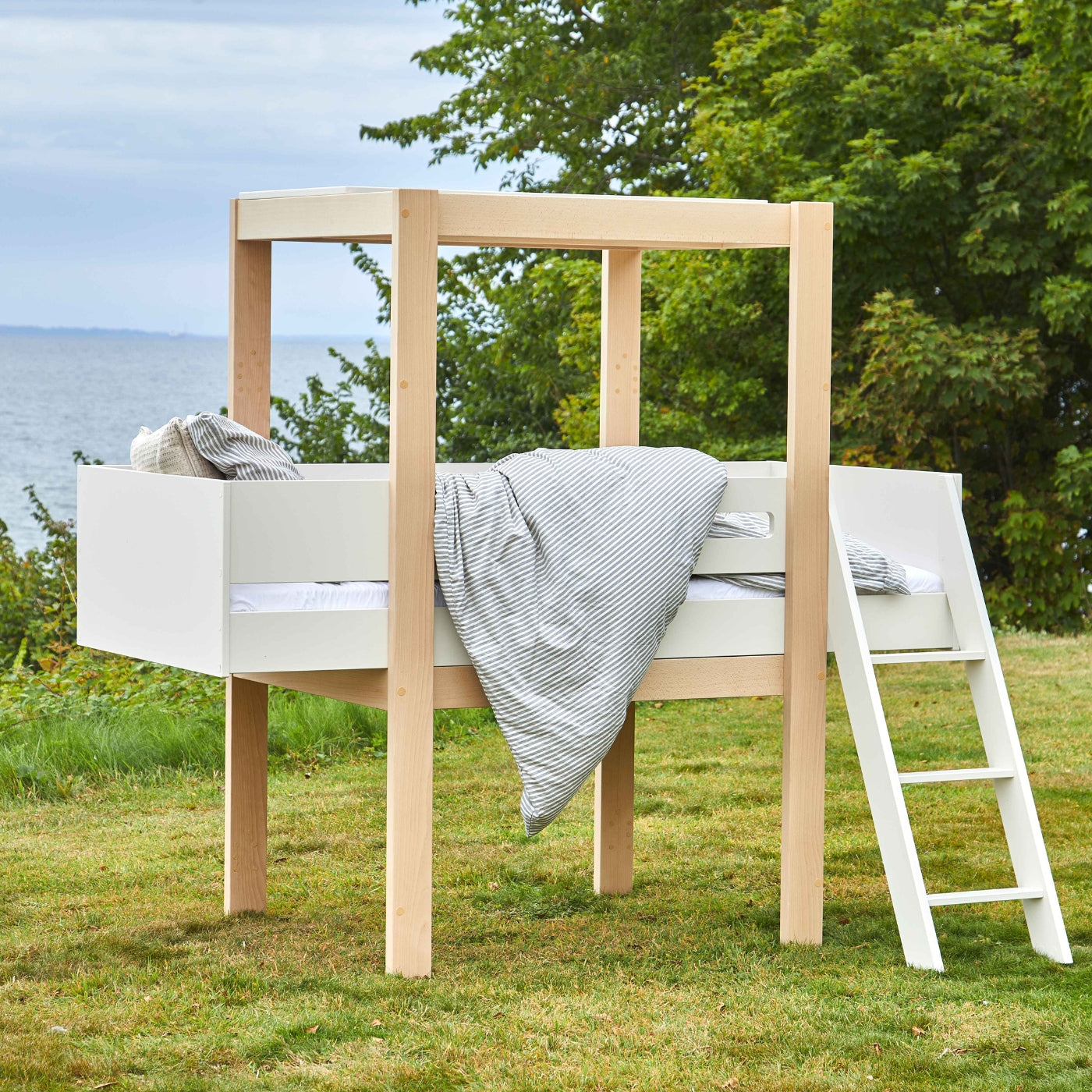
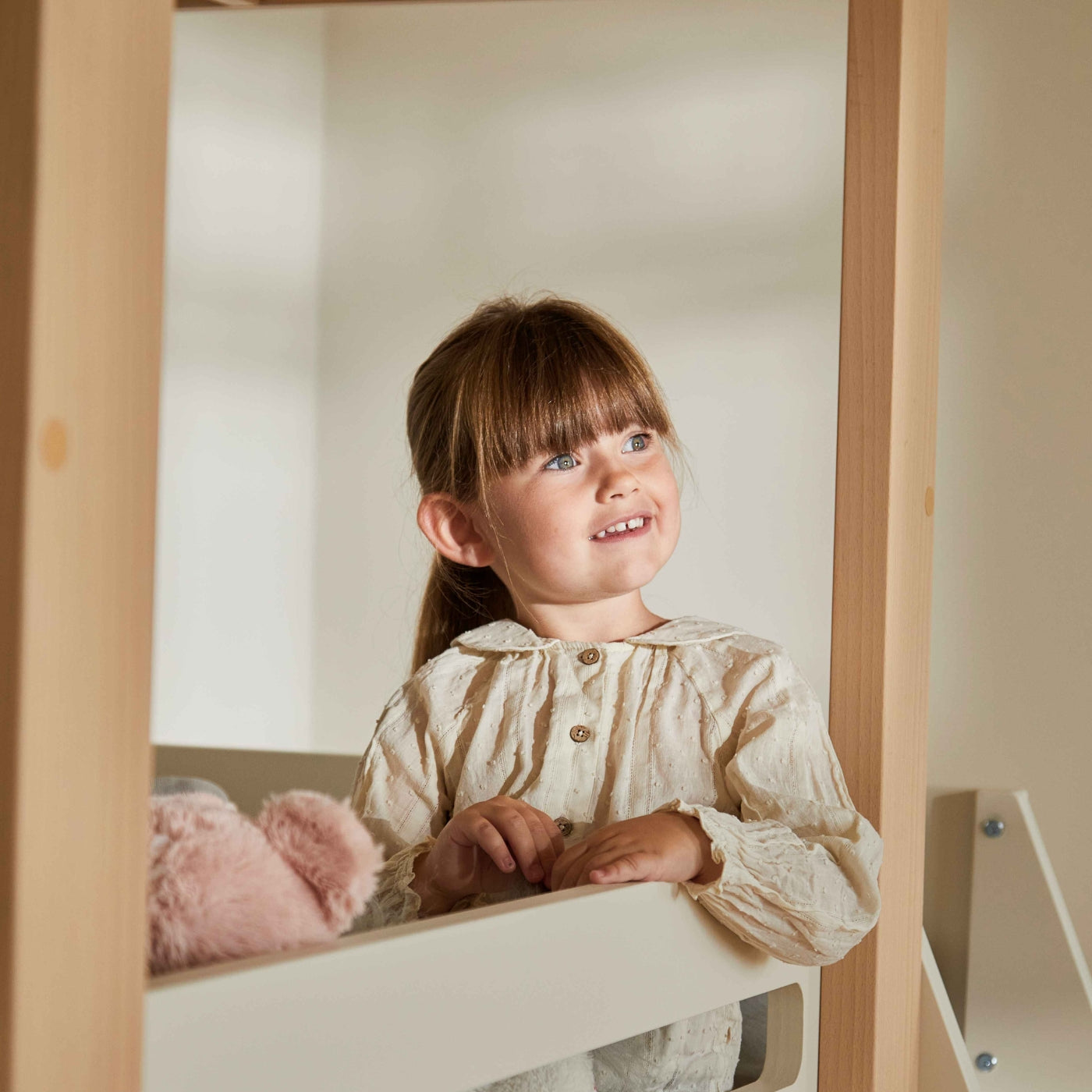
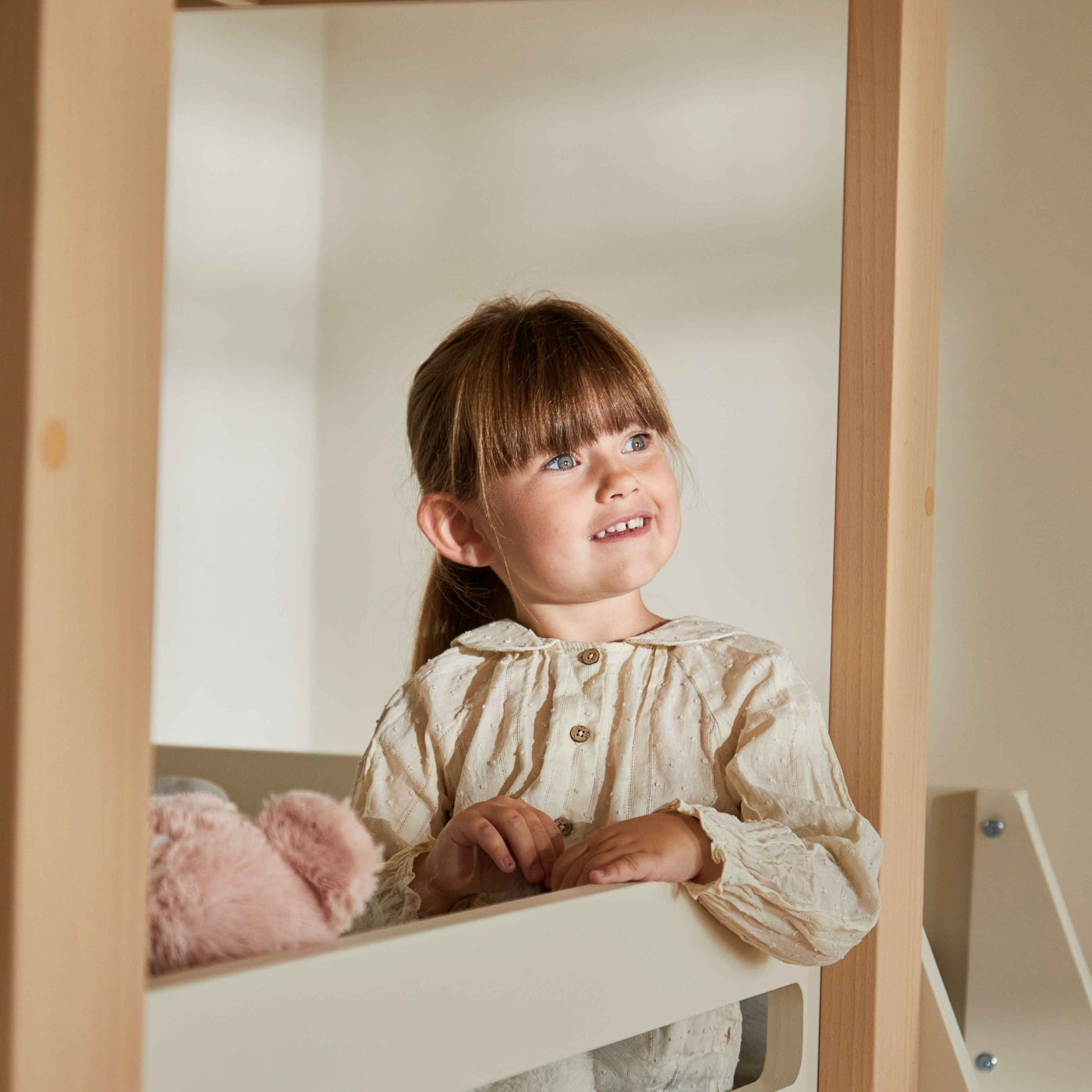
Decorating a child's room can support motor development by integrating movement naturally into the space. For example, a half-height bed can be combined with:
When movement is part of the furniture, physical activity becomes a natural part of everyday life – even indoors.

Climbing and balance strengthen the whole body
Climbing is one of the most effective forms of play and motor development. When a child climbs, several senses and muscle groups are activated simultaneously.
Climbing strengths:
-
balance and coordination
-
core muscles
-
body awareness
-
spatial orientation
At the same time, self-confidence increases when the child masters new movements. Each successful experience strengthens the feeling of “I can do it myself”.

Motor development and calmness are linked
It may seem counterintuitive, but active children often find it easier to calm down. When their bodies are allowed to move, the child calms down more easily, both during homework and bedtime.
Therefore, designing a children's room with space for movement can also support:
-
better concentration
-
more stable sleep
-
greater emotional balance
Movement and stillness are not opposites, they are prerequisites for each other.

When the child grows
Play changes character with age. Wild climbing can develop into more structured movement, strength training or sport.
Flexible children's room design makes it possible to adapt the space to the child's motor development. Movement does not disappear, it simply changes form.
Create a child's room that enhances development
Play and motor development in children doesn't have to only take place outside the home. By incorporating movement into the children's room, you create a space that supports:
-
physical development
-
confidence
-
concentration
-
well-being
Sometimes motor development starts with a place where the child can use their whole body, including indoors.